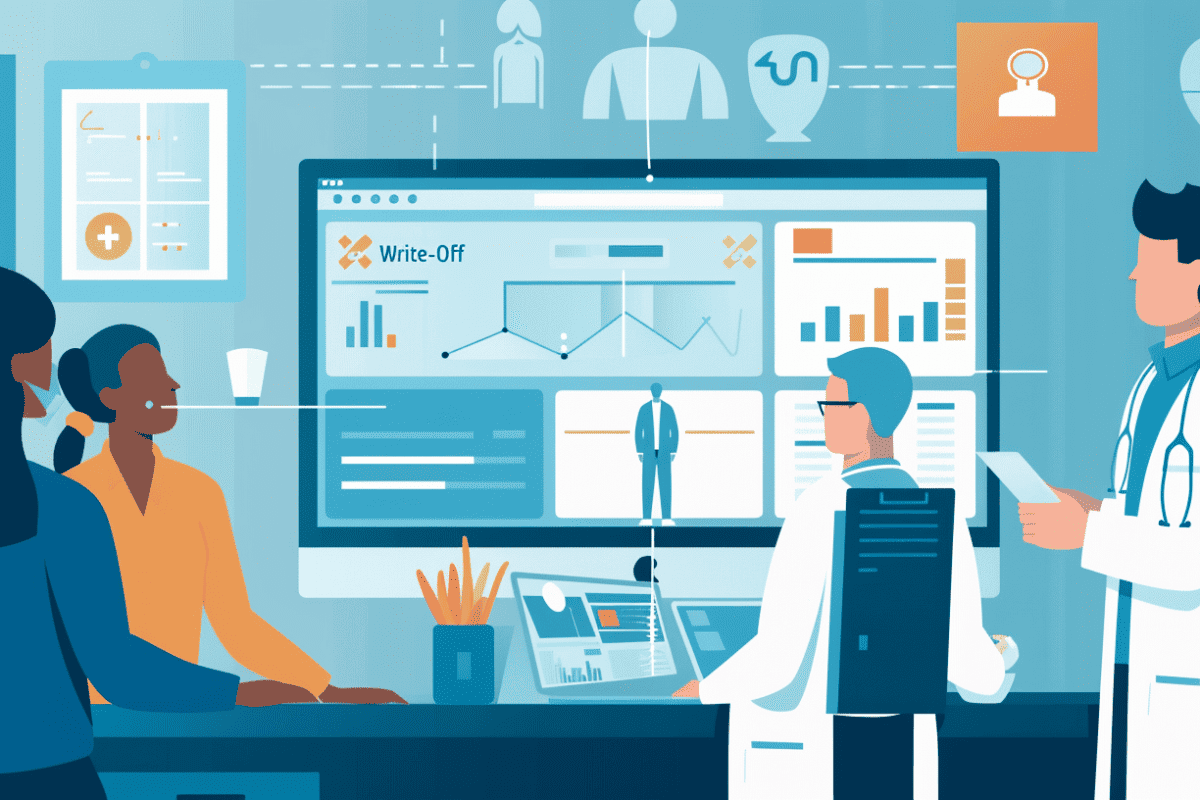
Digital healthcare is changing how medical organizations collect information, coordinate services, and support patient care. Electronic health records, laboratory systems, patient portals, and digital reporting tools have made it easier to store and exchange medical information. Yet, behind these advances lies a challenge that deserves more attention: ensuring that the information being shared is accurate, consistent, and connected to the right patient.
Healthcare organizations may invest in advanced software and analytics platforms, but the value of these technologies depends heavily on the quality of the underlying data. When patient information is incomplete, inconsistent, or duplicated across multiple systems, even a well-designed digital platform can struggle to provide a reliable picture of a patient’s history. Improving healthcare data quality is therefore more than a database management task. It is an essential part of building dependable digital healthcare systems.
When One Patient Has Multiple Records
Imagine a patient who visits a hospital, receives laboratory testing at another facility, and later consults a specialist. Each organization may collect the patient’s demographic information independently. A small difference in spelling, an outdated address, or a missing field can result in separate records being created for the same individual. These differences may appear insignificant at first. However, as information moves between departments and applications, they can make it harder to assemble a complete patient history. Duplicate records can create administrative complications, increase the time spent verifying information, and make reporting less reliable. Fragmented information can also make it difficult for authorized healthcare professionals to locate relevant details when reviewing a patient’s history.
The challenge becomes more complex when organizations rely on multiple electronic health record systems, laboratory platforms, billing applications, spreadsheets, and older databases. Each system may follow its own data-entry conventions and formatting rules. The solution is not simply to collect more information. Healthcare organizations also need reliable processes for connecting existing information and determining which records belong to the same person.
Why Healthcare Data Integration Matters
Healthcare information rarely originates from a single application. Different departments and external partners generate data for different purposes, often using different formats and technologies. Data integration helps connect these separate sources so information can be processed and analyzed within a consistent environment. For example, a healthcare organization may receive demographic information from a registration application, test results from a laboratory system, and administrative information from a billing platform. Before these datasets can be combined effectively, differences in field names, date formats, missing values, and data structures must be addressed.
A well-designed integration process provides a repeatable way to collect information, validate it, standardize its format, and transfer it to an appropriate destination. This is where data engineering becomes especially valuable in healthcare. Instead of relying entirely on manual corrections, organizations can establish automated workflows that apply consistent rules whenever new or updated information arrives. Automation cannot eliminate every data-quality problem, but it can make information management more consistent, traceable, and manageable as data volumes grow.
How ETL Supports Better Healthcare Data
One established approach to data integration is Extract, Transform, and Load (ETL). This process provides a structured way to move information from different sources into a centralized database or data warehouse.
The process involves three main stages.
Extract: Information is collected from source systems, databases, files, or other supported applications.
Transform: The collected information is checked, cleaned, standardized, and evaluated against defined rules. This stage can identify missing values, inconsistent formats, invalid entries, and potential duplicate records.
Load: Validated information is transferred into the target database for storage, reporting, or further analysis.
Technologies such as Microsoft SQL Server and SQL Server Integration Services (SSIS) can support these workflows in organizations that use Microsoft-based data platforms. SQL Server provides relational data storage and query capabilities, while SSIS supports the development and execution of data integration processes. For example, an automated workflow can standardize incoming dates, remove unnecessary spaces from text fields, validate required attributes, and compare incoming records with existing patient information before loading the data into a target system. These checks help make data quality a repeatable operational activity rather than an occasional manual task.
Identifying Duplicate Patient Records
Patient deduplication requires more care than simply deleting rows that look alike. Two records may represent the same person even when some demographic details differ. At the same time, two different people may share similar names and dates of birth. A reliable matching process must distinguish between genuine duplicates and legitimate similarities. One approach is deterministic matching, which compares selected fields using predefined rules. Depending on the organization’s policies and available information, these rules might evaluate combinations of approved identifiers and demographic attributes. This method can work well when information is consistent. However, it may fail to identify records containing spelling variations, outdated contact details, or formatting differences.
Fuzzy matching techniques can help address these situations by measuring similarities across selected fields. For instance, a system may flag two records for review when their names and other demographic attributes are sufficiently similar, even if they are not identical. The results must be handled carefully. Similarity alone does not prove that two records belong to the same patient. Organizations need appropriate matching thresholds, validation procedures, and human review for uncertain cases. When duplicate records are confirmed, established policies should guide how information is consolidated while preserving important history and auditability. The goal is to create a trustworthy, unified patient identity without accidentally merging information belonging to different individuals.
Protecting Patient Information and Building Trust
Healthcare information is sensitive, and integrating datasets creates responsibilities that extend beyond technical accuracy. Organizations must ensure that only authorized personnel and systems can access patient information. Appropriate safeguards may include role-based permissions, encryption, secure data transfers, audit logs, retention policies, and regular access reviews. Data pipelines should also minimize unnecessary exposure of sensitive information. Development and testing activities should use appropriately protected data, including synthetic or de-identified information where suitable.
Equally important is the ability to trace how information moves through a system. Recording processing errors, documenting changes, and maintaining data-quality logs can help technical teams investigate discrepancies and demonstrate that established procedures are being followed. In the United States, organizations subject to HIPAA must address applicable privacy and security requirements. Technology alone does not guarantee compliance; implementation practices, organizational policies, and ongoing oversight are equally important. Trustworthy healthcare data requires both sound engineering and responsible governance.
Common Challenges and Practical Solutions
Building an effective data integration framework takes more than selecting the right software. Healthcare organizations must understand their existing systems, identify where information originates, and establish clear rules for handling inconsistencies. Legacy applications may store information in formats that are difficult to reconcile. Different departments may use conflicting definitions for the same field. Large datasets can create performance challenges, particularly when incoming records must be compared against millions of existing entries.
Organizations can address these issues by profiling source data before implementation, documenting data flows, using appropriate database indexes, and adopting incremental processing where suitable. It is also important to measure data quality. Useful indicators include the percentage of records that pass validation, the number of potential duplicates identified, the proportion of matches requiring manual review, and the frequency of failed processing jobs. These measurements help teams understand whether their processes are improving over time. A phased implementation can further reduce risk. Testing with representative datasets in a non-production environment allows teams to evaluate matching rules, identify false matches, and correct processing problems before introducing changes into operational systems.
The Future of Connected Healthcare
As healthcare becomes increasingly data-driven, the ability to connect information reliably will remain an important part of digital transformation. Analytics, artificial intelligence, population health initiatives, and public health reporting all depend on information that can be interpreted consistently and associated with the correct individuals. However, connecting more systems does not automatically produce better information. Without careful integration, validation, identity management, and governance, digital platforms can reproduce existing data-quality problems at a much larger scale.
Healthcare organizations must therefore look beyond the adoption of new technologies. They need processes that ensure information is accurate, systems that can exchange data reliably, and safeguards that protect patient privacy. The broader lesson is simple: digital healthcare depends not only on the applications people use, but also on the quality of the information those applications contain. Better data does not replace clinical expertise or sound decision-making. It provides a stronger foundation on which healthcare professionals, administrators, and researchers can work with greater confidence. As healthcare continues to evolve, improving data quality and patient record management will remain essential steps toward a more connected, efficient, and trustworthy healthcare system.
Author Bio
Surendra Reddy Alavala is a database development, administration, and business intelligence expert with over 10 years of global experience. He is a Senior Member of the IEEE, an author, and an academic researcher whose work focuses on data engineering, business intelligence, healthcare data integration, and data-driven analytics.

Digital Health Buzz!
Digital Health Buzz! aims to be the destination of choice when it comes to what’s happening in the digital health world. We are not about news and views, but informative articles and thoughts to apply in your business.